Top Commercial Cleaning Brampton
Your facility requires consistent cleaning schedules customized for specific risks, daily throughput, allergen management, and regulatory visits, including verifiable documentation validating HACCP requirements, inspection compliance, and public health regulations. The details below give guidance on sanitation program requirements.
Main Points
- Brampton sanitation experts maintain restaurants, grocery departments, commissaries, warehouses, bakeries, schools, mobile vendors, and allergen-sensitive operations.
- Zone-based workflows disinfect frequently contacted areas, food-contact equipment, kitchens, floors, drains, restrooms, and storage areas for reducing cross-contamination.
- Certified specialists validate approved sanitizer dilution, suitability, and contact time, then log conclusion with checks, reviews, and correction logs.
- Daily, recurring, and seasonal duties designated by area form maintenance schedules built on hazard, production rate, switches, incidents, and guidelines.
- Choose providers with HACCP, health regulatory, knowledge, safety training, education, coverage, credentials, color-coded instruments, and compliance-ready maintenance files.
What Brampton Venues Require Food Safety Cleaning?
You must comply with food safety cleaning if your operation is covered by health department oversight, food standards, or HACCP requirements. This covers dining establishments, employee cafes, distribution hubs, market sections, meat shops, fish stands, retail outlets, and food service kitchens.
Compliant food safety cleaning is additionally necessary in supply facilities, manufacturing operations, cold storage areas, bakery retailers, educational nutrition programs, banquet halls, and food delivery hubs. Portable and seasonal operations apply similarly, like catering trucks, festival vendors, and pop-up food booths. Your facility needs written cleaning standards if your staff process ingredients, portion ready-to-eat items, reheat products, or store allergens. In Brampton, food safety is not voluntary; it forms statutory, functional, and public health standards.
What Do Brampton Cleaning Professionals Handle?
Professional cleaning teams specializing in Brampton sanitize touched surfaces, food preparation areas, floors, and sanitary facilities to satisfy food safety standards and health requirements. Emphasis on these spaces occurs because they pose maximum contamination danger, potential for accidents, and possible regulatory violations.
Knowing their service areas allows you to confirm your facility's cleaning meets operational demands and regulatory compliance.
Prioritizing High-Touch Surface Sanitizing
establish how frequently each zone is cleaned
if results are outside acceptable limits. They further reduce contamination spread through rotating cleaning materials, using unidirectional procedures
Food Prep Areas, Flooring, and Sanitary Facilities
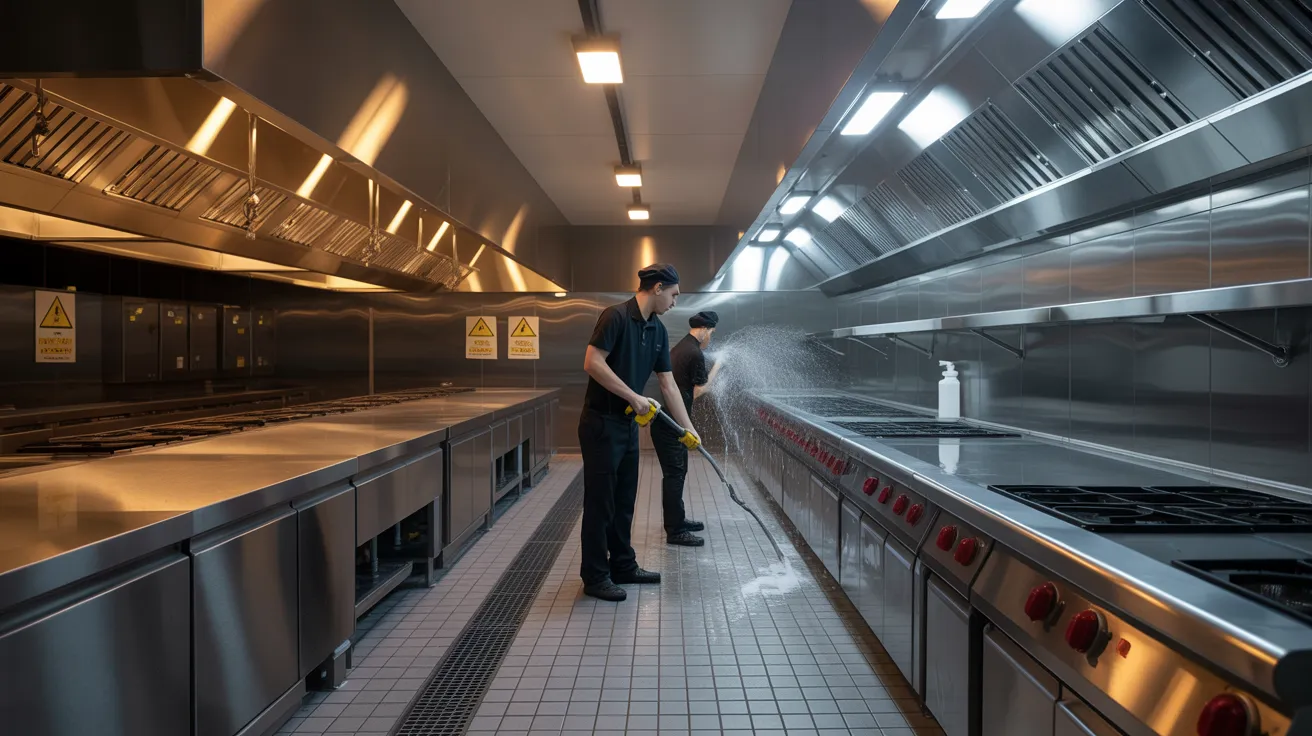
Brampton cleaning professionals will handle kitchens, floors, and restrooms since each space presents different food safety concerns, slip-and-fall, and community health challenges. In industrial kitchens, you need degreasing on cook lines, equipment exteriors, drains, prep surfaces, and splash zones to minimize contamination and pest pressure.
You should also expect documented floor care. is likewise provided as part of the service.
Restroom sanitation requires decontaminating touchpoints, fixtures, partitions, dispensers, and waste containers, restocking supplies and controlling odours. They also service restaurant moprooms, where chemical storage, sink hygiene, and drainage conditions can affect sanitation compliance and staff safety daily.
How Food Safety Cleaning Benefits Brampton Operations
Brampton operations require proper hygiene standards to meet compliance obligations and pass inspections. You also reduce bacterial spread through proper cleaning of food-preparation surfaces, appliances, and frequently-touched items. Most importantly, you help protect public health by lowering the risk of foodborne illness in your facility.
Health Code Compliance
Food companies in Brampton face strict public health standards, making food safety cleaning vital to meeting health code requirements, defending patrons, and avoiding enforcement action. You must maintain clean food preparation areas, written maintenance records, correct sanitizer application, and auditable operational standards that meet municipal and provincial inspection expectations.
During inspections of your operation, inspectors check if your cleaning program ensures protected inventory management, appliance cleanliness, waste handling, and bathroom upkeep.
Contamination Management
Following health code standards depends on your skill in stopping cross-contamination in routine food work and sanitation. You should isolate raw items from prepared foods, disinfect work areas after use, and store chemicals away from food-contact items. Well-defined guidelines decrease contamination chances and promote steady regulatory adherence.
Implementing allergen segregation helps keep priority allergens from contacting communal work zones, bins, or devices. Utilize separate boards, color-labeled items, and clear tool marking so workers don't combine products during preparation or service. Enforce hand hygiene following raw meat, seafood, eggs, or allergen-containing products. Replace wiping cloths regularly, and validate disinfectant levels using test strips. When your team learns these guidelines every shift, you create a cleaner, safer operation that satisfies Brampton's food safety needs regularly.
Community Health Protection
If proper sanitation declines, you don't merely risk a failed inspection—you amplify the risk of pathogenic contamination affecting customers, staff, and the broader Brampton region. You also undermine your responsibility in safeguarding community wellness, especially in busy food facilities where contamination can spread quickly through surfaces, equipment, and touchpoints.
You depend on sanitation protocols that remove soils, effectively sanitize, and verify results. This involves maintaining contact periods, utilizing authorized sanitizers, maintaining records, and coaching staff to meet health-unit expectations. These actions support pathogen control by reducing microbes before affecting food surfaces or hands. In Brampton, effective cleaning protects at-risk groups, minimizes disease spread, and proves your diligence. When you maintain standards, you exceed requirements—you substantially reduce risk and advance safer food handling throughout the city.
In What Ways Does Cleaning Help Achieve Food Safety Compliance?
Implementing rigorous cleaning routines improves food safety compliance by lowering contamination exposure, limiting pathogen development, and maintaining your facility's adherence to sanitation requirements under HACCP-based programs and public health regulations. You validate that product-contact areas are visibly clean and microbiologically controlled, backing documented preventive controls and inspection readiness.
Systematic cleaning further solidifies allergen prevention by removing residues that can cause undeclared allergen exposure. When you match established sanitation practices with regulatory training, your staff can adhere to consistent approaches, use approved chemicals correctly, complete records thoroughly, and respond to variations in advance of problems worsen. Systematic cleaning enables supply chain documentation, verifies remedial measures, and proves accountability in audits. It also helps you protect product integrity, sustain compliance standards, and minimize the chances of enforcement actions, market recalls, grievances, and avoidable health hazards.
When Ought You Arrange Commercial Cleaning?
Elevate cleaning frequency during peak output, product changeovers, spill incidents, and following maintenance work.
facility closures, seasonal-driven soil accumulation, or pest pressure periods.
What Should You Look For in Brampton Cleaning Experts?
Begin by evaluating providers based on sanitation compliance standards—not solely on budget. You should confirm that each organization comprehends CFIA, public health, and HACCP-based requirements applicable to your facility. Request insurance certificates, WHMIS compliance, staff training documentation, and oversight procedures. Assess whether technicians recognize cross-contamination risks, chemical handling protocols, and verifiable sanitation records.
You must also evaluate operational reliability and oversight. Seek references from food facilities in Brampton, then assess response speed, corrective-action procedures, and communication standards. Ensure the company enables supplier checks and can provide inspection-ready documentation when authorities or third parties demand verification. Verify equipment is maintained, color-coded items are deployed correctly, and site-specific hazards are understood. A reputable service safeguards compliance, product integrity, and your market standing.
Which elements are part of a Food Safety Cleaning Plan?
Establish a documented plan that establishes every sanitation duty, standard, and accountability before production begins. You should specify cleaning intervals, permitted substances, dilution percentages, exposure times, instruments, and inspection methods for each sector, surface, and equipment. Add pre-operational inspections, corrective actions, and employee training requirements.
Your strategy should also tackle cross-contamination controls, waste handling, pest-prevention measures, and documented schedules for facilities, drains, flooring, and food-preparation surfaces. Specify how you'll distinguish between uncooked and prepared items, support ingredient tracking, and keep accurate allergen labeling through validated cleaning between product changes. You should establish accountability, keep signed records, and evaluate results against regulatory standards, HACCP controls, and customer requirements. When gaps appear, modify procedures immediately and retrain staff.
Frequently Asked Questions
Are cleaning services available for overnight shifts in Brampton facilities?
Yes, you can arrange sanitation coverage to manage overnight shifts in Brampton facilities. You'll organize overnight sanitation around operational windows, access controls, and staffing requirements. Providers typically establish nightshift procedures to reduce disruption, ensure compliance, and document completed tasks. You should verify response times, management, lockout procedures, and waste handling before beginning service. If you operate regulated spaces, you'll also need documentation that enable audits and compliance verification.
Do sanitation professionals offer emergency spill response solutions?
Yes, you can locate several Brampton sanitation experts offering emergency response services. They handle contamination, evaluate risks, contain affected areas, and perform swift decontamination to minimize risk and limit operational impact. You should confirm timeframes, certifications, safety measures, and disposal methods. If your facility must meet standards, pick a provider that documents see information on this incidents, follows procedures, and supports audits.
Are green disinfectants safe for food preparation areas?
In essence, natural disinfectants remain safe for food-contact surfaces provided you buy disinfectants approved for food contact that adhere to regulatory requirements. Verify contact times, mixing proportions, and rinse protocols ahead of deployment. Natural-based solutions decrease chemical hazards, although you need confirmation of performance against harmful bacteria. To ensure residue-free conditions, follow manufacturer directions precisely and validate the disinfectant satisfies relevant food safety standards.
Do sanitation programs allow for seasonal production changes?
Without question, cleaning plans are highly adaptable for seasonal production changes. Modify schedules, labor allocation, disinfectants, and confirmation procedures to align with seasonal patterns while sustaining compliance standards. Minimize production downtime by organizing sanitation amid production shifts, peak seasons, and usage cycles. Additionally update SSOPs, instruction programs, and environmental monitoring to capture transient threats, new allergens, or increased soiling. Ongoing evaluations preserve the strategy functional.
Will commercial cleaners teach your staff on hygiene best practices?
Yes, professional cleaning services typically educate your staff on sanitation best practices. You receive employee instruction on correct chemical application, contact times, contamination control, equipment disassembly, and record keeping. They typically align instruction with HACCP, GMP, and CFIA or local public health regulations. Many also conduct hygiene inspections to verify compliance, identify gaps, and reinforce corrective actions. This allows you to sustain uniform processes, succeed in audits, and reduce food safety risks daily.
Conclusion
Partnering with Brampton commercial cleaning and food safety experts goes beyond tidying—it guarantees your operation stays inspection-compliant and your protocols remain compliant. From kitchen areas to production zones, each cleaned area and maintained corner reduces health hazards and prevents major expenses. By scheduling maintenance on appropriate schedules and executing a comprehensive cleaning strategy, you protect staff, clients, and your reputation. In a tightly controlled market, sanitary conditions can't be overlooked—they're critical to business success.